Raised Bed Builder

Plan your raised garden bed, board by board.

Enter your bed size and get everything you need in one place: an optimized lumber cut list, posts and screws, soil in the bag sizes your store sells, drip line, a cost estimate and a shopping list you can print or share. Free, no sign-up.

  • Rectangle and L-shaped beds
  • Many beds at once
  • Bags vs bulk soil
  • Metric or imperial
Start planning
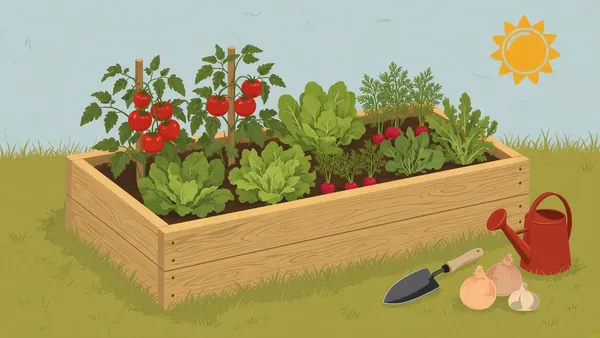
Illustrated wooden raised bed full of tomatoes, lettuce, carrots and radishes, with a watering can, a trowel and a bright sun

Your beds

Measure the outside edges of each bed. Add as many beds as you like, in any mix of sizes.

Walls

Soil

Extras

See my plan

Top view

Lumber and cut list

Posts, brackets and screws

Soil and mix

Liner, hardware cloth and drip

Cost estimate

Shopping list

Everything for every bed in one list. Check items off at the store.

Some "Find it" links may become affiliate links. If you buy through them we may earn a small commission at no extra cost to you. It never changes our numbers.

What fits in your beds

Square foot spacing, based on common extension service guidance. Enter how many 1 ft squares you want for each crop.

This month in the garden

How to build a raised garden bed

  1. Pick the spot. Most vegetables need 6 to 8 hours of direct sun. Choose level ground close to a hose. Keep beds 4 ft wide or less so you can reach the middle from either side.
  2. Cut your boards. Use the cut list above. Long walls run full length, and the end walls fit between them, so end boards are 3 in shorter than the bed's outside width.
  3. Assemble the walls. Stand a 4x4 post in each corner and drive two 3 in exterior screws through each board end into the post. Build one row at a time and check for square by measuring both diagonals.
  4. Protect the bottom. If gophers or voles are a problem, staple 1/2 in hardware cloth across the bottom and 6 in up the walls. On grass, a layer of plain cardboard smothers the turf.
  5. Fill and water. Mix your soil on a tarp or in the bed, water it well, and let it settle a few days. Top it up to about 1 in below the rim before you plant.
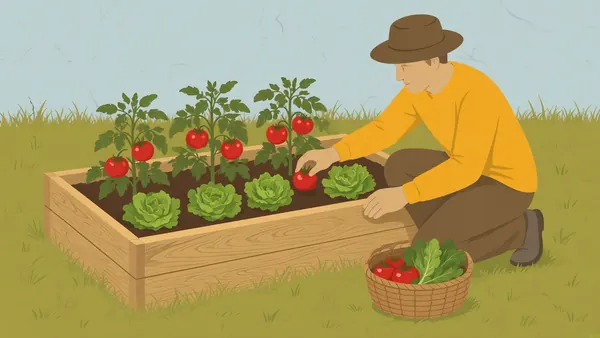
Illustrated gardener harvesting fresh vegetables from a finished raised bed

How deep should a raised bed be?

Lettuce, spinach, herbs and radishes do well in 6 to 8 in of soil. Tomatoes, peppers, beans and squash prefer 10 to 12 in. Carrots, parsnips and potatoes like 12 to 18 in. If your bed sits on concrete or a patio, add a few inches since roots cannot reach the ground below.

Choosing lumber and soil

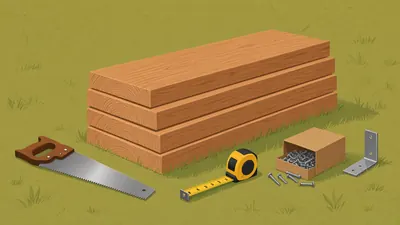
Illustrated stack of cedar boards with a hand saw, tape measure and screws

Which wood lasts?

Cedar and redwood resist rot on their own and usually last 10 to 15 years. Pressure-treated pine made since 2004 uses copper-based treatments considered safe for food gardens and lasts about as long. Untreated pine is cheapest but may need replacing in 3 to 5 years.

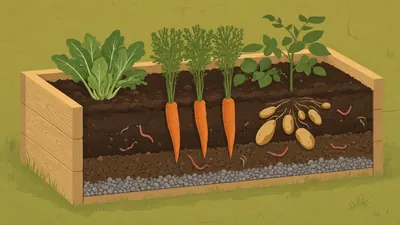
Illustrated soil cross-section showing layers of topsoil and compost with carrots, potatoes and earthworms

Which soil mix?

The classic 60/30/10 blend of topsoil, compost and an aerator like perlite is affordable and holds moisture well. Mel's Mix, from the Square Foot Gardening method, is lighter and drains fast but costs more. A 50/50 topsoil and compost blend is a simple middle ground.

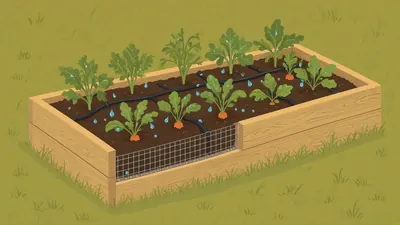
Illustrated drip line watering plants in a raised bed lined with hardware cloth

Why drip irrigation?

Raised beds dry out faster than the ground. Drip line puts water at the roots, keeps leaves dry to reduce disease, and uses less water than a sprinkler. Run lines about 12 in apart and add a timer for steady watering.

Raised bed questions

How much soil does a 4x8 raised bed need?

A 4 by 8 ft bed filled 10 in deep holds about 27 cubic feet, roughly 1 cubic yard. That is 18 bags of 1.5 cu ft. Add about 10% for settling.

Why is my cut list different from just measuring the walls?

Lumber is sold by nominal size. A 2x6 is really 1.5 in thick and 5.5 in wide. Because the end boards fit between the long boards, they are cut 3 in shorter. The planner also packs cuts onto the fewest boards and allows 1/8 in for each saw cut.

Is it cheaper to buy soil in bags or bulk?

For one small bed, bags usually win. Once you need more than about 2 cubic yards, bulk delivery is often cheaper even after the delivery fee. The planner compares both using prices you can edit.

Do I need corner posts or brackets?

Either works. 4x4 posts are cheap and sturdy. Metal brackets are quick to install and make beds easy to take apart. Walls longer than 6 ft benefit from a mid-wall post to stop bowing once the bed is full.

Should I put anything under a raised bed?

Hardware cloth stops burrowing pests. Cardboard smothers grass and breaks down in a season. Avoid plastic sheeting under the soil because it blocks drainage.

How do I share or save my plan?

Your plan is saved in the page address as you type. Use "Share plan link" or bookmark the page to come back to it. Nothing is stored on our servers.